
MYCENAE / ARGOLIS
The Birthplace of One of the
Ancient World's Greatest Civilizations
Mycenae · A Civilisation That Changed the World
Mycenae stands as one of the greatest symbols of world civilisation and one of humanity's most significant archaeological sites. For more than three and a half millennia, its name has remained inseparably linked with the birth of a civilisation that shaped the history of Greece, influenced the development of the ancient world, and has continued to inspire literature, art, and archaeological research through the centuries.
Mycenae is far more than a place of imposing fortifications, monumental tombs, and extraordinary archaeological discoveries. It is where the foundations of an organised society emerged, with a structured administration, a flourishing economy, extensive trade networks stretching across the Eastern Mediterranean, remarkable artistic achievement, and architecture that continues to inspire admiration to this day. Mycenae was also one of the principal administrative centres where Linear B, the earliest deciphered form of the Greek language, was used as the official writing system of the great Mycenaean palatial centres. It is a place where history meets mythology, where archaeological discoveries confirmed traditions long regarded as legend, and where every monument tells a chapter in the collective memory of human civilisation.
The enduring significance of Mycenae extends far beyond the borders of Greece. It is a UNESCO World Heritage Site, a landmark of archaeology and history, and a place that continues to inspire millions of visitors, reminding us that some civilisations belong not only to the past but also form the foundations upon which the modern world was built.
The Chronicle of Discovery
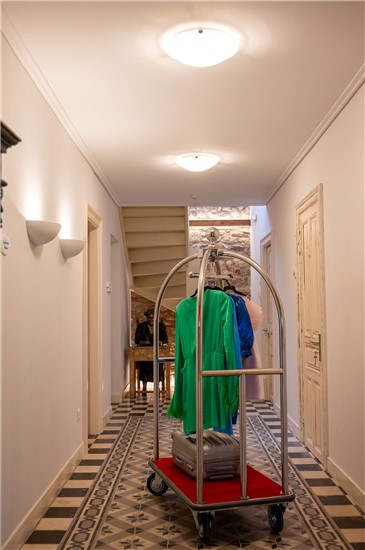
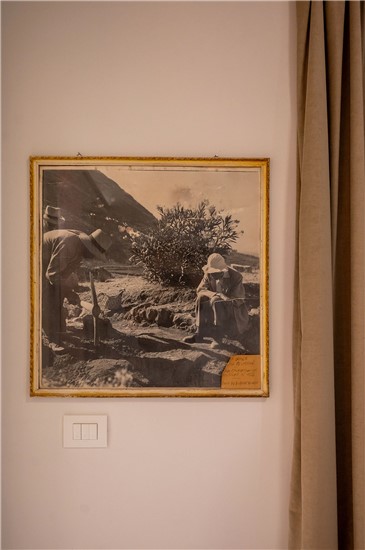
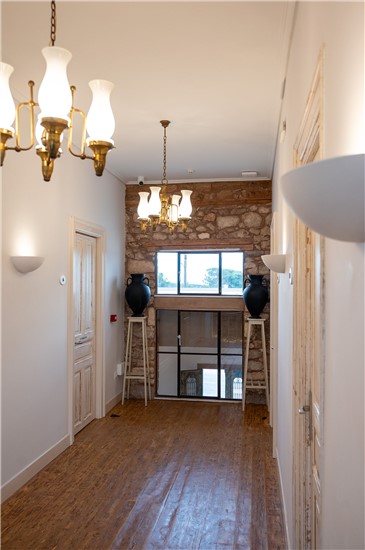
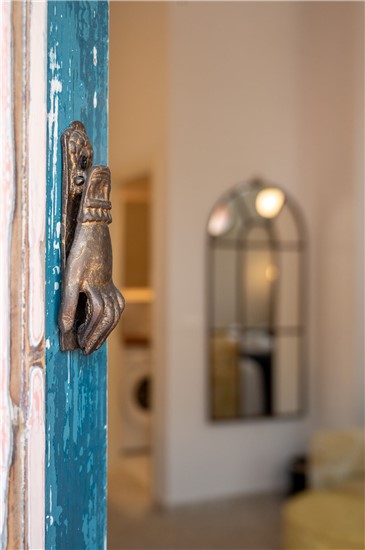
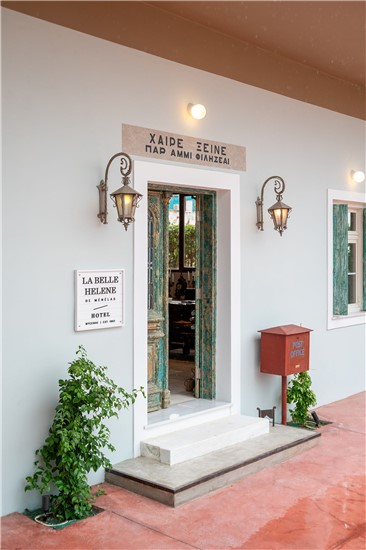
In 1876, Heinrich Schliemann's excavations at Mycenae marked one of the defining moments in the history of world archaeology. The discovery of the Royal Grave Circles and their extraordinary gold grave goods revealed to the world the true scale of the Mycenaean civilisation, establishing Mycenae as an international centre of archaeological research. During the same period, the historic building that today houses La Belle Hélène de Ménélas became Schliemann's first place of residence and, in the years that followed, became closely associated with the golden age of archaeological discoveries at Mycenae, serving as a lasting point of reference for the archaeologists, scholars, and researchers who contributed to the study, interpretation, and international recognition of the Mycenaean civilisation.
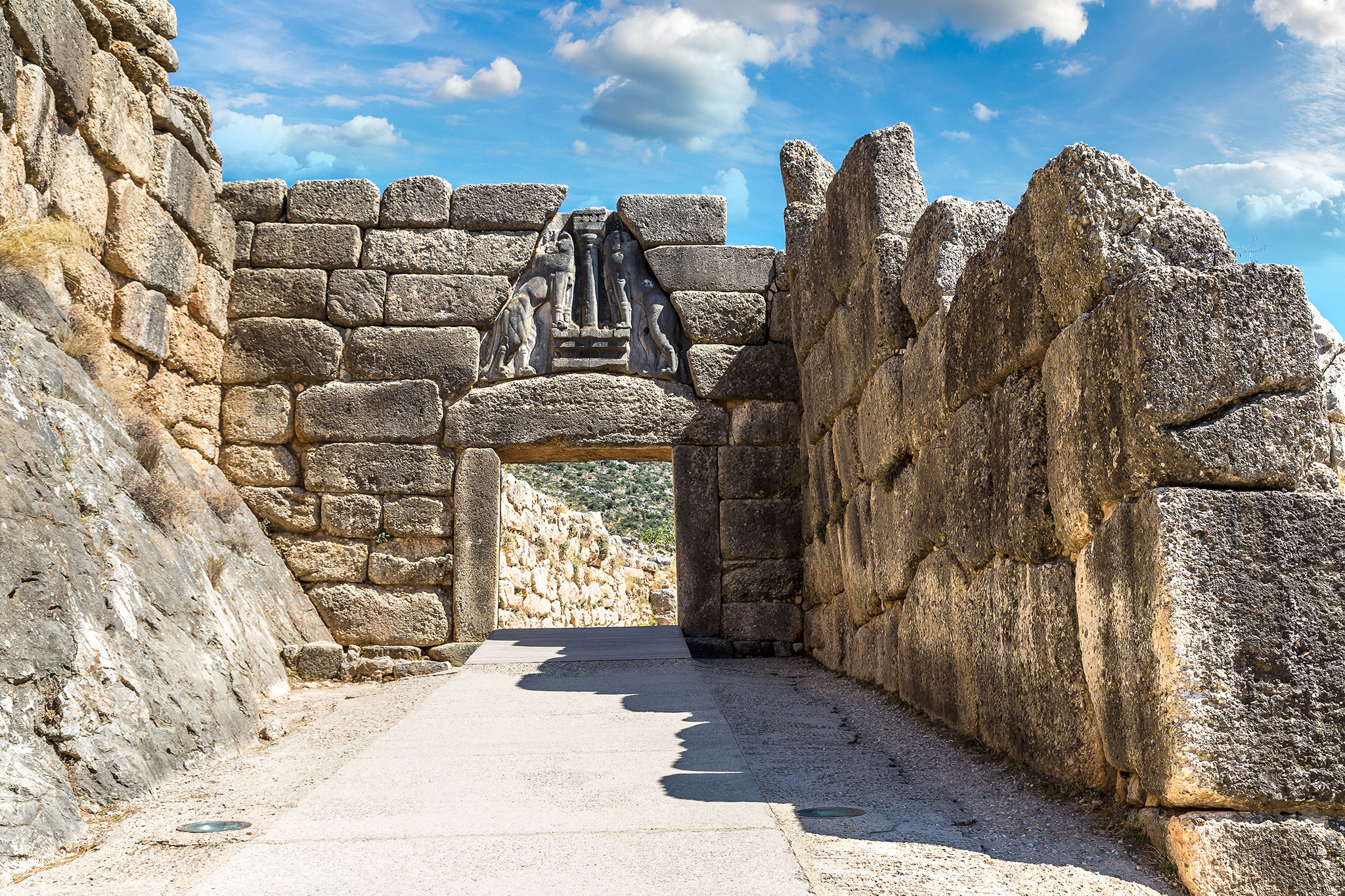
Lion
Gate
- Mycenaean Citadel
- 1250 BC
- Main Entrance
- Two Lionesses
The Lion Gate is the enduring symbol of Mycenae and the most iconic monument of the Mycenaean civilisation. Built around 1250 BC, it served as the monumental main entrance to the Mycenaean Citadel and is the oldest surviving monumental sculpture in Europe. The relief of two confronting lionesses above the lintel symbolised the power, authority and prestige of the Mycenaean kingdom. To this day, it remains the timeless emblem of Mycenae.
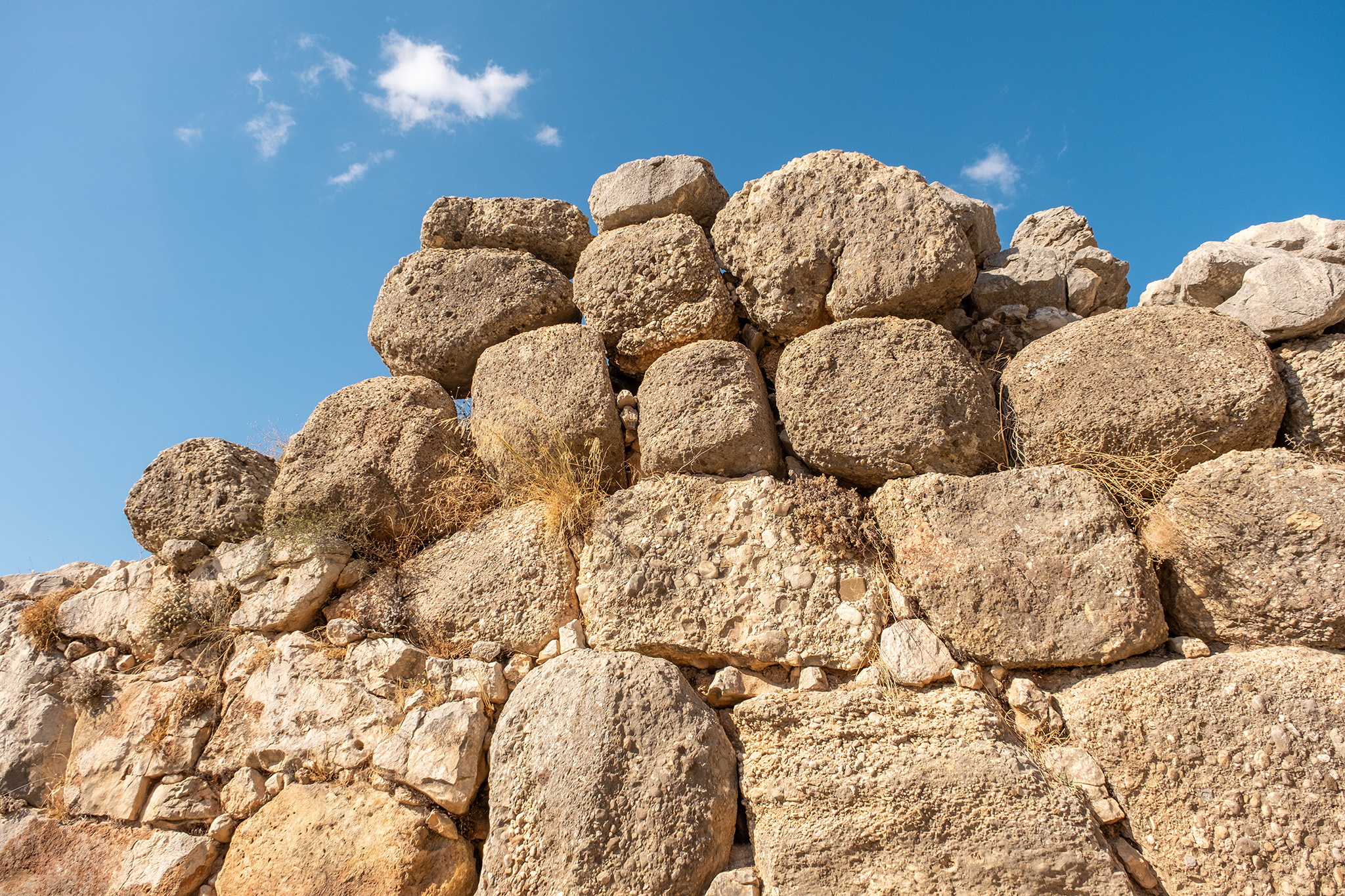
Cyclopean
Walls
- Fortifications of the Citadel
- 13th Century BC
- Up to 8 m High
- Massive Limestone Blocks
The Cyclopean Walls are among the greatest engineering achievements of the Mycenaean civilisation. They surround the Mycenaean Citadel, protecting its administrative and political centre. Constructed from enormous limestone blocks without the use of mortar, they inspired such awe among later Greeks that they believed only the mythical Cyclopes could have built them. Even today, their imposing presence stands as a testament to the engineering expertise, organisation, and power of one of the ancient world's greatest civilisations.
Royal
Palace
- Palatial Complex
- 13th Century BC
- Throne of the Wanax
- Administrative Centre
The Royal Palace was the political, administrative, and economic heart of Mycenae. At its centre stood the Megaron, the official hall of the Wanax, where the kingdom's most important decisions were made and ceremonies, official gatherings, and religious rituals took place. Its architecture, with its spacious interiors and carefully planned layout, reflects the high level of administration and organisation that characterised the Mycenaean civilisation.
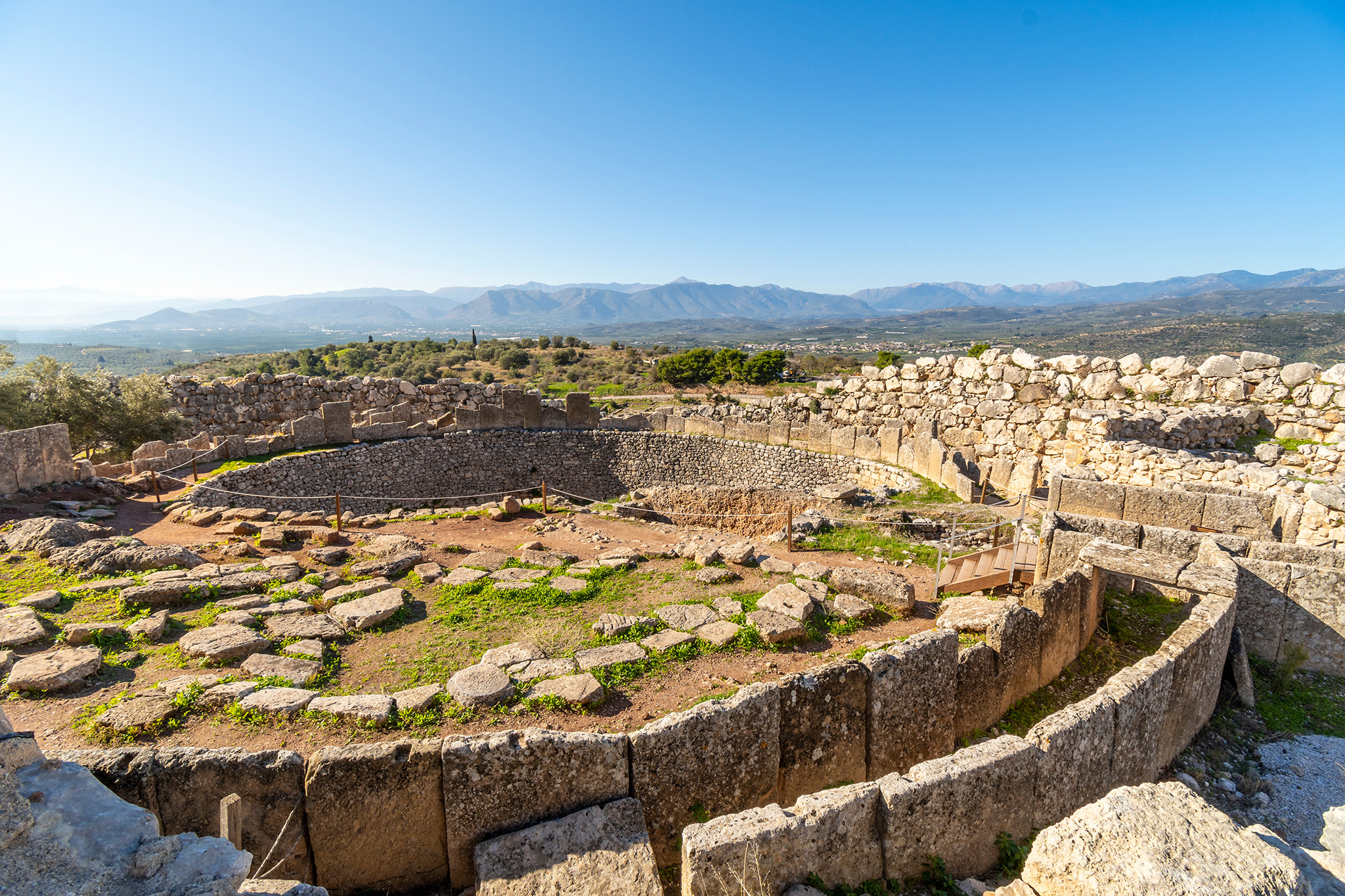
Grave
Circle A
- Within the Citadel
- 16th Century BC
- Royal Shaft Graves
- Mycenaean Gold
Grave Circle A is one of the most important funerary monuments at Mycenae and is closely associated with Heinrich Schliemann's most remarkable discoveries. Its six royal shaft graves yielded priceless gold grave goods, weapons, jewellery, and the famous Mask of Agamemnon - finds that revealed the wealth, power, and exceptional craftsmanship of the Mycenaean elite. To this day, Grave Circle A remains one of the most important symbols of the flourishing Mycenaean civilisation.
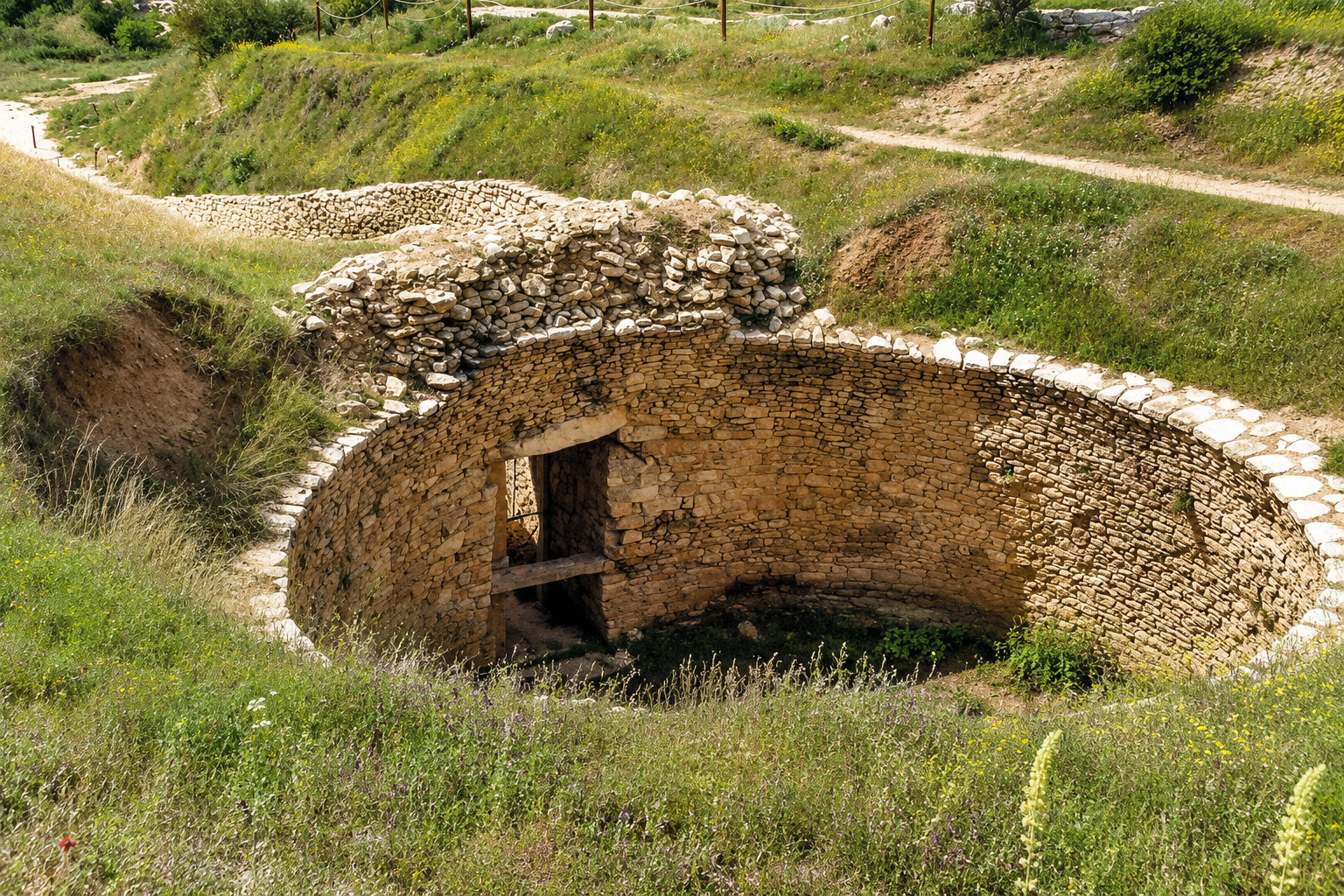
Grave
Circle B
- Outside the Citadel Walls
- 17th Century BC
- 24 Burials
- Early Royal Cemetery
Grave Circle B is the earliest royal cemetery at Mycenae and predates the great flourishing of the Mycenaean civilisation. Its graves contained members of the early aristocracy, buried alongside valuable weapons, jewellery, and rich grave goods that testify to the gradual emergence of Mycenae's powerful ruling elite. The discoveries from Grave Circle B reveal the first steps of a civilisation that, only a few centuries later, would come to dominate the Greek mainland.
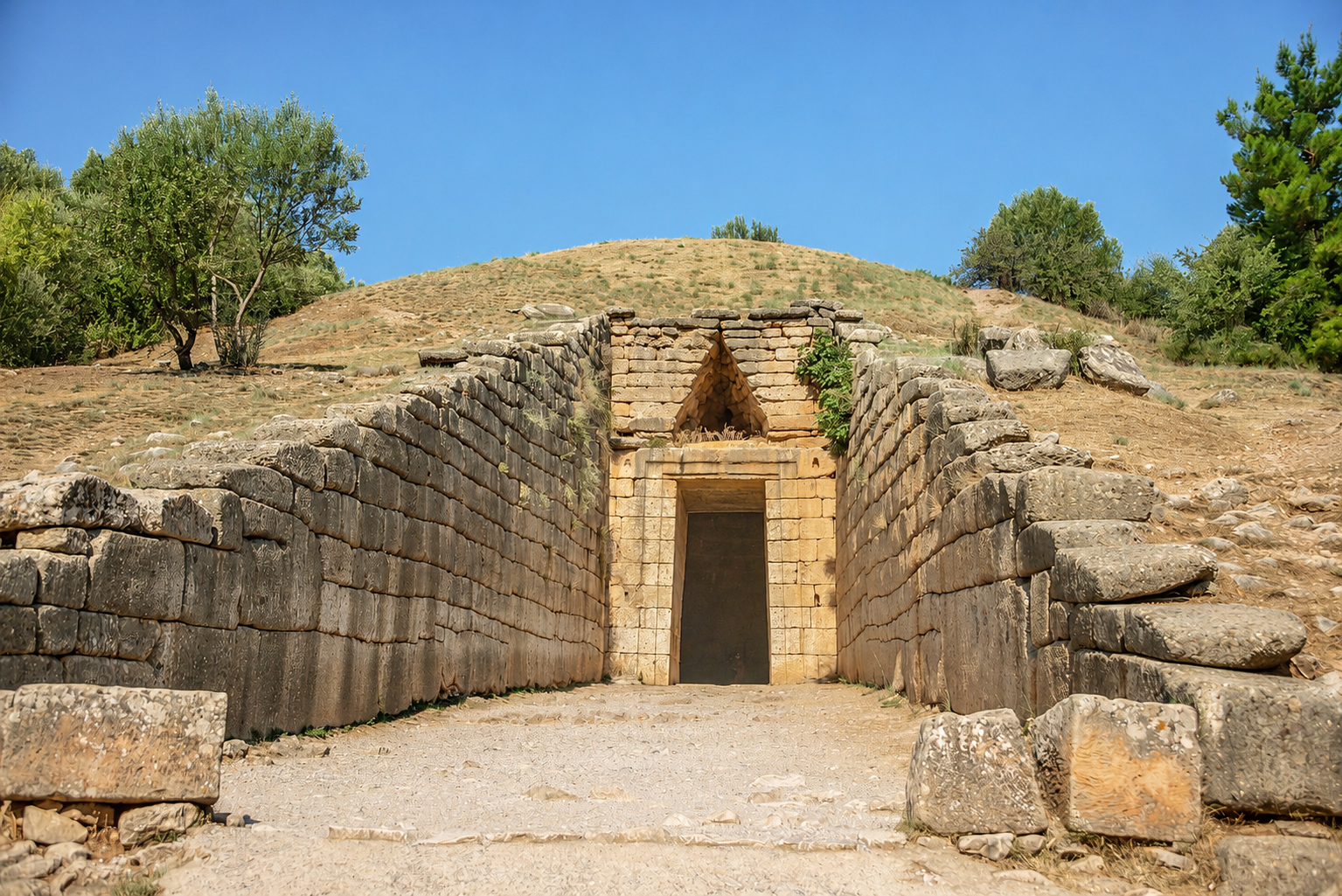
Treasury of
Atreus
- Outside the Citadel
- 1250 BC
- Tholos Tomb
- 13.5 m High
The Treasury of Atreus is the most imposing and best-preserved funerary monument at Mycenae. Although it was never a treasury but a royal tholos tomb, its monumental construction continues to impress with its architectural perfection and remarkable engineering. For more than a thousand years, it had the largest dome ever constructed in the world, making it one of the greatest achievements of Mycenaean engineering and architecture.
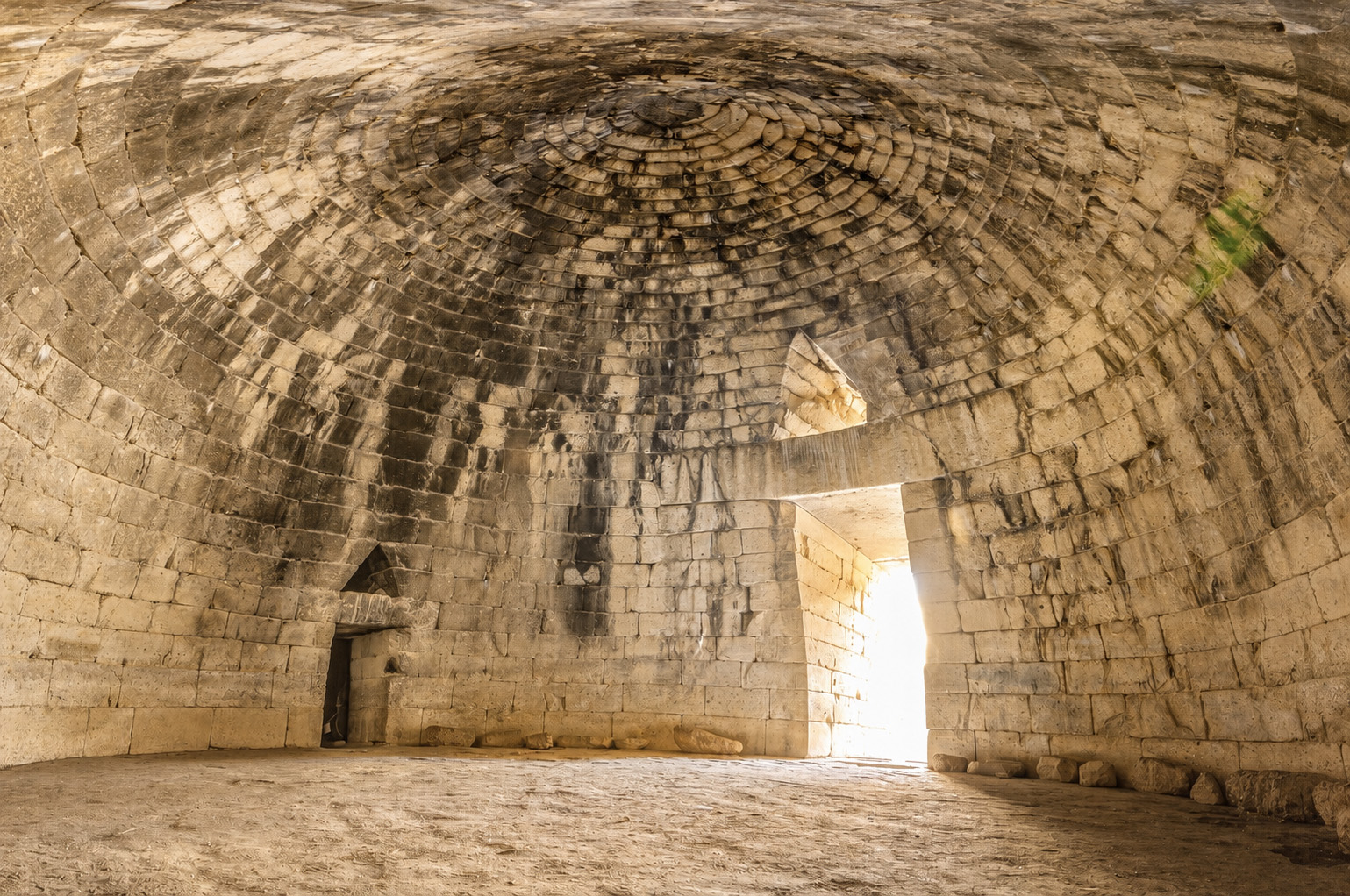
Tholos
Tombs
- Surrounding Area
- Royal Burials
- Monumental Architecture
- Corbelled Domes
Beyond the famous Treasury of Atreus, Mycenae is home to several other remarkable tholos tombs, which rank among the finest examples of Mycenaean funerary architecture and were built for the burial of members of the royal family and the upper aristocracy. Their impressive corbelled domes, together with the valuable grave goods placed alongside the deceased, bear witness to the wealth, engineering expertise, and the importance the Mycenaeans attached to the afterlife. These tombs rank among the most important monuments of ancient Greek architecture and engineering.
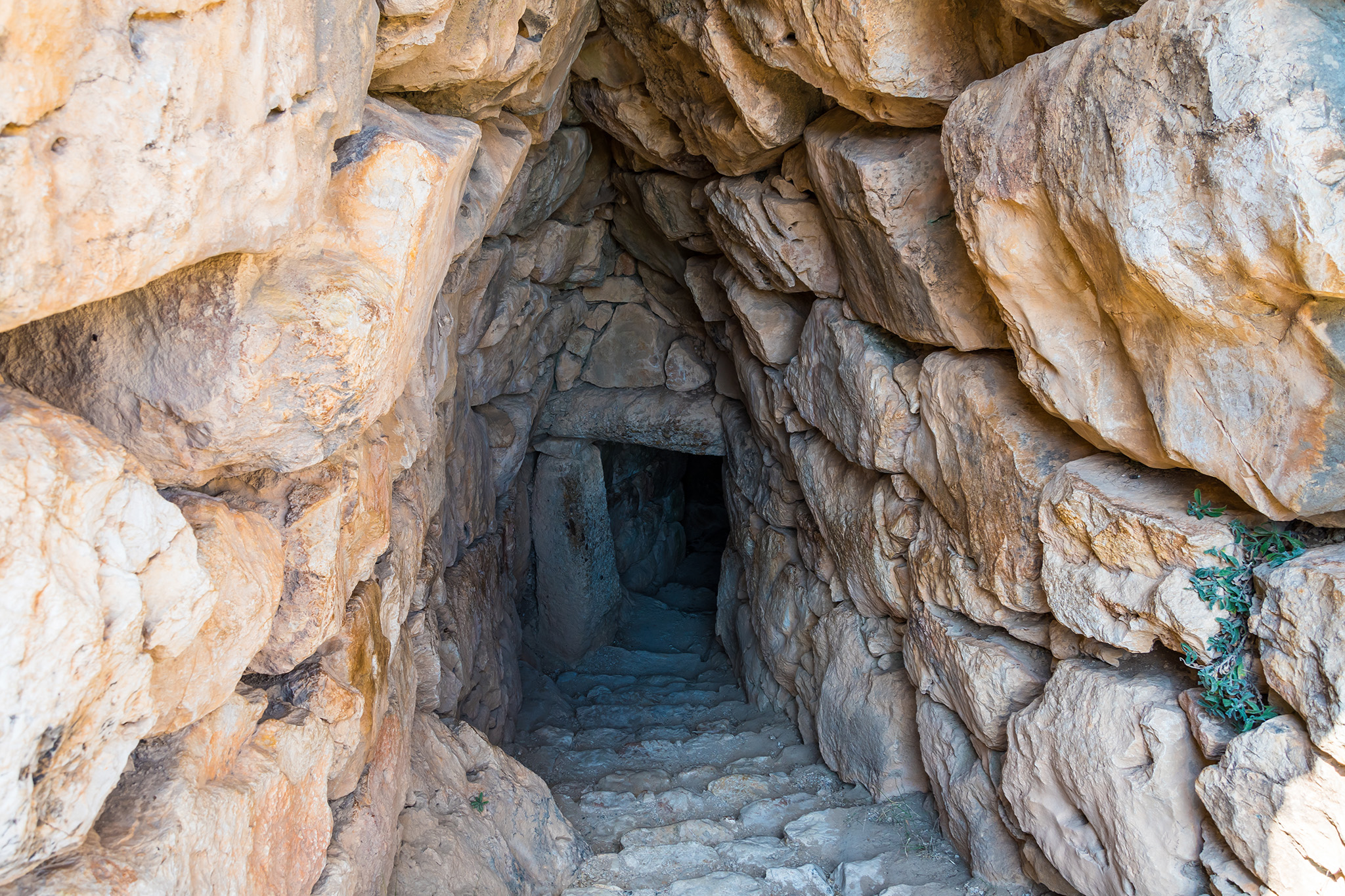
Underground
Cistern
- Mycenaean Citadel
- 99 Steps
- Hidden Access
- Water Supply
The Underground Cistern is one of the most remarkable engineering achievements at Mycenae. A subterranean staircase of 99 rock-cut steps provided secure access to a natural water source, even during periods of siege, allowing the inhabitants to obtain water without leaving the protection of the citadel walls. Its construction reflects the high level of engineering, strategic planning, and organisation that characterised the Mycenaean civilisation.
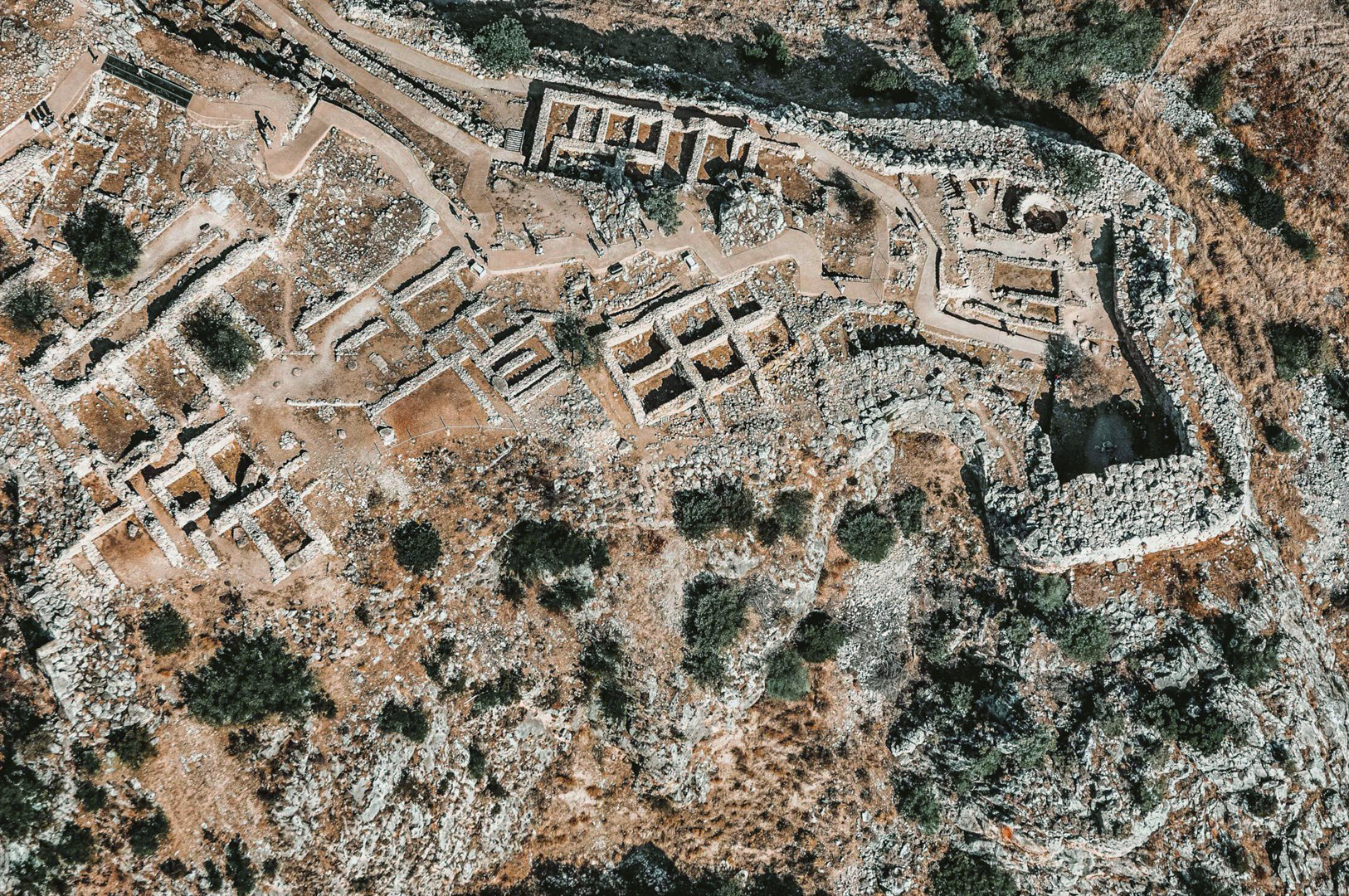
Places of
Worship
- Religious Centre
- Peak Sanctuaries
- Religious Ceremonies
- Worship of Deities
Mycenae was not only a political and administrative centre but also an important place of religious worship. Within the Citadel and throughout the wider archaeological site, sanctuaries, altars, and ceremonial areas have been identified, bearing witness to the central role of religion in the daily life of the Mycenaeans. These discoveries reveal a world in which power, faith, and religious ceremonies coexisted, forming an integral part of the organisation and identity of the Mycenaean civilisation.
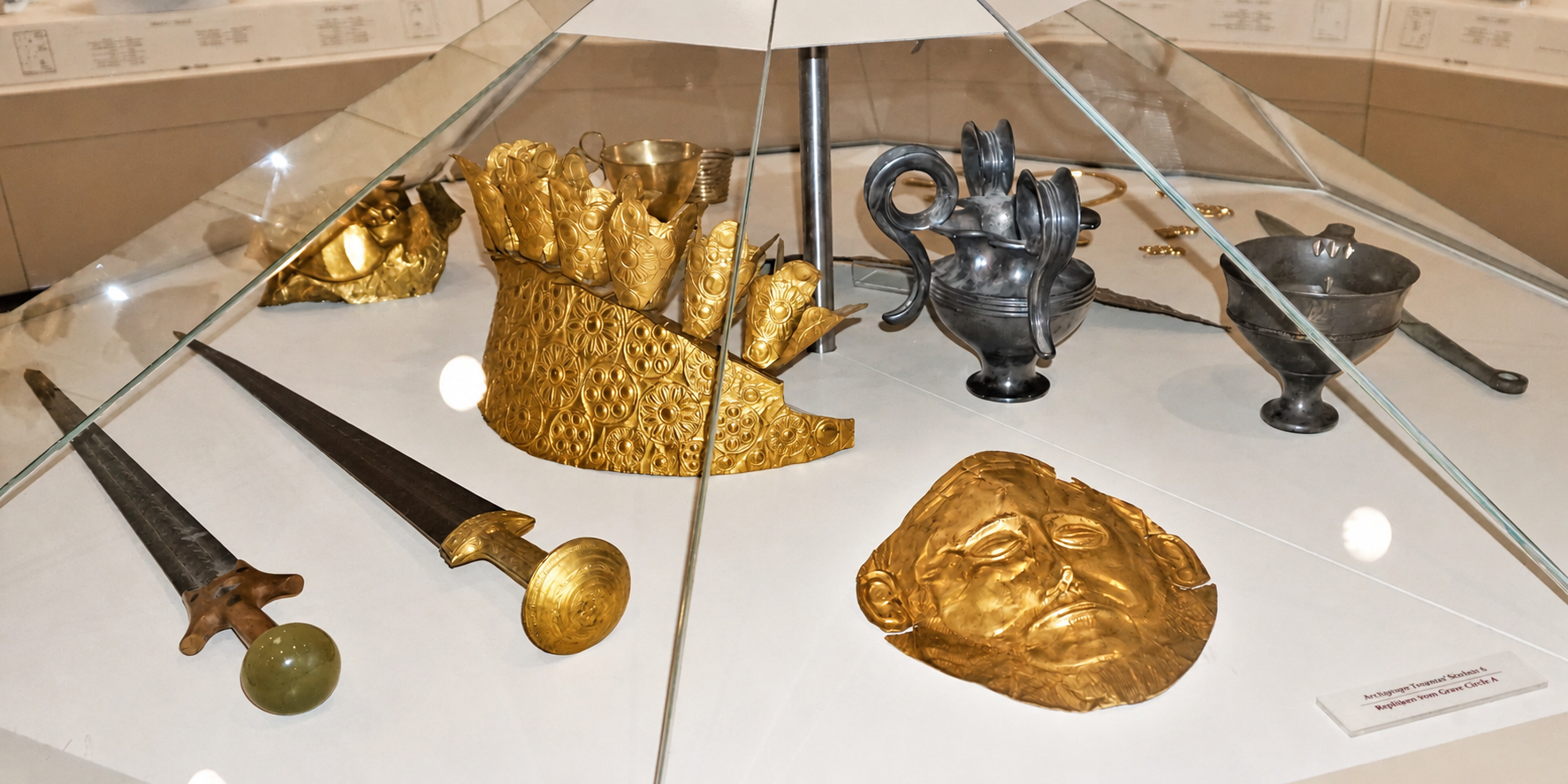
Archaeological
Museum
- Exit of the Archaeological Site
- 14 Gallerie
- Authentic Artefacts
- Mycenaean Gold
The Archaeological Museum of Mycenae completes the visitor experience, showcasing exceptional artefacts that reveal the daily life, art, religion, and social organisation of the Mycenaean world. From exquisite gold grave goods and weapons to pottery, sealstones, and everyday objects, its collections bring the monuments of the archaeological site to life, offering a comprehensive insight into a civilisation that continues to captivate the world.

The Myths & Legends of Mycenae
Mycenae is perhaps the only place in the world where historical reality and mythical tradition are so deeply intertwined that, even today, they remain two inseparable facets of the same cultural heritage.
According to Greek tradition, this was the kingdom of Perseus, the legendary founder of the city. It later became the seat of the royal House of Atreus, whose most renowned figures included Atreus, Agamemnon, Menelaus, Clytemnestra, and Orestes.
The abduction of Helen of Troy became the catalyst for the Trojan War, while Agamemnon's return, his murder, and Orestes' revenge inspired both the Homeric epics and the masterpieces of ancient Greek tragedy by Aeschylus, Sophocles, and Euripides.
The archaeological discoveries at Mycenae demonstrated that behind these timeless myths lay a real kingdom of extraordinary power, wealth, and organisation, giving new historical dimension to stories that had long been regarded as legend alone.
Whether remembered as historical figures or mythical heroes, these legendary personalities remain an inseparable part of Mycenae's identity, preserving the enduring legacy of a place that continues to captivate the cultural imagination of the world.
UNESCO WORLD HERITAGE SITE
Since 1999, Mycenae has been inscribed on the UNESCO World Heritage List, one of the highest international distinctions awarded to an archaeological site, recognising the unique contribution of the Mycenaean civilisation to the development of European and world civilisation.